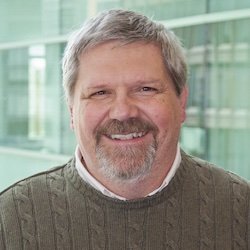
David Corliss is the founder and director of Peace Work, a volunteer cooperative of statisticians and data scientists applying statistical methods to issue-driven advocacy. Human trafficking research is a major initiative at Peace Work. Corliss is also a research scholar and a member of the Global Association of Human Trafficking Scholars.
Episode Description
On the podcast, we talk about the ways we live in and with data, as well as the ways data shape our lives and our politics. Public discourse around data is often wrapped up in the negative ways it can impact our lives. A movement among statisticians, data scientists, and other researchers shows the positive impacts of data when used to work towards solutions to humanitarian problems. The data for good movement is a focus of this episode of Stats and Stories with guest David Corliss.
Timestamps
David Corliss' Background and Journey (2:10)
Successful Outcomes of Data for Good Initiatives (5:33)
Conceptualizing Data for Good (8:18)
Peace Work's Business Model and Volunteer Coordination (10:01)
Advocacy and Public Involvement (14:06)
Challenges and Solutions in Data for Good (20:36)
Hot Topics Data for Good is Working On (25:01)
Full Transcript
Rosemary Pennington
We talk a lot on the podcast about the ways we live in and with data—the ways data shape our lives and our politics. Public discourse around data is often wrapped up in the negative ways they can impact our lives. A movement among statisticians, data scientists, and other researchers shows the positive impacts of data when used to work toward solutions to humanitarian problems. The data-for-good movement is a focus of this episode of Stats + Stories, where we explore the statistics behind the stories and the stories behind the statistics.
I'm Rosemary Pennington. Stats + Stories is a production of the American Statistical Association in partnership with Miami University’s departments of statistics and media, journalism, and film. Joining me, as always, is regular panelist John Bailer, emeritus professor of statistics at Miami University.
Our guest today is David Corliss, the founder and director of Peace Work, a volunteer cooperative of statisticians and data scientists applying statistical methods to issue-driven advocacy. Human trafficking research is a major initiative at Peace Work. Corliss is also a research scholar and a member of the Global Association of Human Trafficking Scholars. David, thank you so much for joining us today.
David Corliss
Thank you so much for having me. I'm delighted to be a part of this podcast that I’ve listened to for so long.
Rosemary Pennington
Your PhD is in statistical astrophysics. So how did you find yourself working on peace and humanitarian issues?
David Corliss
The grounding in mathematics and analytics is absolutely essential. The connection to working as a statistician for good causes sort of came through a back door. Let me tell you a story about that.
As you said, my background is in the hard sciences, but I worked in industry for a number of years—and still do. I keep one foot in academia, publish the occasional paper, but most of my work has been in industry. A lot of that has been in marketing analytics.
When we look at data for social good, it's amazing the wide variety of things that are needed, and it turns out that marketing is one of them, as the story will show. I was working at Ford Motor Company and also volunteering. I had volunteered for many, many years with Habitat for Humanity, helping build houses. You wouldn’t think the two would ever cross paths.
But one day, the manager of the team next to mine—who was also one of the leaders of the local Habitat for Humanity chapter—asked if I could do a marketing study for them. They had two questions: How do we find more donors? How do we find more volunteers?
And it turns out—I’ve repeated this story I don’t know how many times—with virtually every charity on Earth, those are the same two questions. In this particular case, the mathematics was actually pretty closely related to what I was doing at work at the time. What I did was a geospatial clustering. I took all the communities in the particular service area this organization worked with—Habitat for Humanity has local chapters—and I did a basic cluster analysis on demographic variables.
I had originally done this for my master’s thesis, working with demographic variables of star populations—different groups of stars that fit into different categories. I took municipalities and put them into different categories. In one cluster, we found communities that were very generous in donating and supporting, but often didn’t have much availability to volunteer on job sites. In another cluster, volunteering was more common, but there were fewer financial resources. In a third cluster were communities where Habitat for Humanity was trying to help.
From there, I made practical recommendations—contact high schools and community groups in volunteer-heavy areas; focus fundraising in communities that looked like strong donor profiles but hadn’t been targeted before. This is about turning numbers into action.
I’ve repeated this kind of work for homeless shelters, food pantries, and other organizations. I now write many grant proposals documenting need. For example, I recently completed a grant proposal for a food bank after COVID-era support programs expired. I used time-series analysis to show how demand had shifted over time, helping foundations understand the urgency.
That’s really how I got connected. It’s my personal story, but it’s also the story of many people in data for good: find an organization you already work with—your kid’s school, a choir, Habitat for Humanity—and bring analytics to the table. I had volunteered hammer and nails for 15 years and
then realized I could make an even greater impact by volunteering my analytics.
John Bailer
That’s a great story—thanks for sharing that background. I’ve got to ask: did they get more money and more volunteers? Did you follow up to see if the advice worked?
David Corliss
Absolutely. I’m a time-series guy, so follow-up is essential. Yes, they did. One community where they had never done fundraising turned out to be very successful. Outreach to schools and civic groups also increased volunteer participation. The follow-up showed clear impact.
Rosemary Pennington
So on the podcast, we’ve had people in the past who are doing public-facing work or work similar to this. When I was preparing for this conversation, I did a lot of research trying to figure out how we’re conceptualizing data for good—what it is and what this movement looks like. There are so many different websites that are proponents of this approach to data work.
I wonder, for you, when you’re explaining to people what data for good is, how do you describe it? How are you conceptualizing it for people?
David Corliss
Data for good is using our analytic skills to make a difference in people’s lives. There are thousands and thousands of people doing data for good every day. They’re working in healthcare, biostatistics, and environmental analysis.
Very often, when I use the term data for good, I’m talking about a smaller slice of that work. My day job right now is with a local electric company in the Detroit metropolitan area, where I’m developing physics-informed AI to predict storm damage. That helps shorten power outages and speed response. That’s data for good, too—people doing this kind of work as part of their jobs.
Then there are focused organizations with different models. One great organization is Statistics Without Borders, which has a close affiliation with the American Statistical Association. It’s easy to get plugged into projects there, and they have leaders who know how to manage work in this space.
Another model is DataKind. They have professional staff who manage projects and bring in volunteers.
Peace Work, my organization, operates entirely as volunteers—100% pro bono. Data for good includes all of this, but Peace Work is specifically focused on advocacy and social problems. Our role is helping coordinate volunteers and match them with projects aligned with their interests.
For example, a statistician once contacted me saying they wanted to work on shark ecology. I knew nothing about shark ecology. I looked around and found a research group in San Diego that needed a statistician, and I connected them.
Peace Work is about making those connections. We break large projects into smaller pieces and distribute them among statisticians working in their spare time. That’s the joke in the name—peace is what we do; piece work is how we do it.
According to the Bureau of Labor Statistics—who I’m a big fan of—there are between 1.2 and 2 million people working professionally in analytics in the U.S. Imagine if 2 million statisticians volunteered just two hours a week. That would be four million hours weekly devoted to social good.
People can get involved locally through organizations like the American Association for the Advancement of Science and its local outreach groups, including Section U for statistics.
Often, the best place to start is where you already volunteer. If you’re walking dogs at a shelter, that’s great. But maybe analytics could optimize volunteer scheduling or intake time to improve outcomes. The question becomes: how can analytics increase your impact?
Rosemary Pennington
You’re listening to Stats + Stories, and we’re talking with David Corliss about data for good.
John Bailer
You started with a great example about finding volunteers and donors, which is common across many organizations. Can you summarize other types of work that commonly come to Peace Work?
David Corliss
Advocacy comes up a lot. This often crosses into public and governmental spaces.
For example, every year hundreds of organizations collaborate on a point-in-time homeless count. Statisticians can help collect data, analyze it, and use it for advocacy—whether that’s with community groups, local governments, or even congressional representatives.
One organization that does great advocacy work for social sciences is COSSA. The American Statistical Association’s science policy team, led by Steve Pierson, also does tremendous work on Capitol Hill.
Statisticians can support advocacy in several ways: participating in organizations, generating public support, writing letters to the editor backed by data. One of my earliest data-for-good projects involved school funding. I analyzed data for a school district in northwest Ohio that was outperforming expectations despite financial constraints. After advocacy supported by data, a funding proposal narrowly passed, and the district continues to thrive.
That follow-up—seeing results—is essential.
John Bailer
I’ve been involved locally with homeless counts, helping analyze and describe the data. It’s incredibly satisfying to use our skills to help organizations and communities. There’s a great return on a small investment.
What are some of the things you and Peace Work have been working on recently that are especially exciting?
David Corliss
I may have painted a bit of a sunshine-and-rainbows picture earlier. Much of my work focuses on people who do very bad things. Human trafficking is a major initiative.
It was so important to me that I didn’t work in that area for my first 10 years in data for good—I needed to get it right. Since 2014, I’ve worked with the Global Association of Human Trafficking Scholars and others.
Right now, we’re forming an analytic center of excellence to support legislative advocacy—helping evaluate which laws and programs work and which don’t. I’ve served as a statistical expert witness in this space.
One current project involves the U.S. Department of Labor’s list of goods produced with forced or child labor. I conducted a matched case-control study comparing countries with similar profiles to identify patterns associated with exploitation.
Another project uses United Nations migration data to analyze human trafficking linked to the war in Ukraine. The data show a long-term upward trend beginning in 2014, well before the current war, with many victims ending up in Russia. Analytics allow us to identify and document these trends and use data as a tool to fight trafficking.
Rosemary Pennington
There’s growing global distrust of data and expertise. What challenges does that create for this kind of work, especially when data are used for advocacy?
David Corliss
That distrust comes from two sides. I’m actually addressing this in a presentation titled “Lies, Damn Lies, and Statistics.” It’s about helping people understand how to read numbers critically.
One way analytics helps is by establishing reliability—especially in legal contexts. I work as a statistical expert witness in legislative testimony and court cases, such as racial profiling cases.
Courts require rigorous standards—peer review, sound methodology—and those standards still matter. We can apply the same discipline used in courtrooms to community advocacy, ensuring credibility even in environments of distrust.
John Bailer
If we could mobilize those millions of volunteer hours you mentioned, what problems most urgently need this kind of effort right now?
David Corliss
The Amstat News column “Stats for Good” identifies key issues each year. Environmental advocacy is a major one—especially around Earth Day projects. Population diversity in marine mammals is another, serving as a canary in the coal mine for environmental health.
Data rescue is critical right now. Many datasets—especially federal, state, and local—are at risk due to funding cuts and staffing losses. Statisticians are working to archive and preserve data already collected.
One of my data-for-good heroes, Dr. Lucky Tran, helped archive vast amounts of CDC data through the Internet Archive.
Another concern is statisticians themselves being under pressure. Advocacy is needed to support statistical agencies, funding, and professional integrity. We must also help communities understand the difference between information and misinformation.
Rosemary Pennington
That’s all the time we have for this episode of Stats + Stories. David, thank you so much for joining us today.
David Corliss
Thank you very much for having me.
Rosemary Pennington
Stats + Stories is a partnership between the American Statistical Association and Miami University’s departments of statistics and media, journalism, and film. You can follow us on Spotify, Apple Podcasts, or wherever you listen to podcasts.
If you’d like to share your thoughts, email us at statsandstories@amstat.org or visit statsandstories.net. Be sure to listen for future editions of Stats + Stories, where we discuss the statistics behind the stories and the stories behind the statistics.